
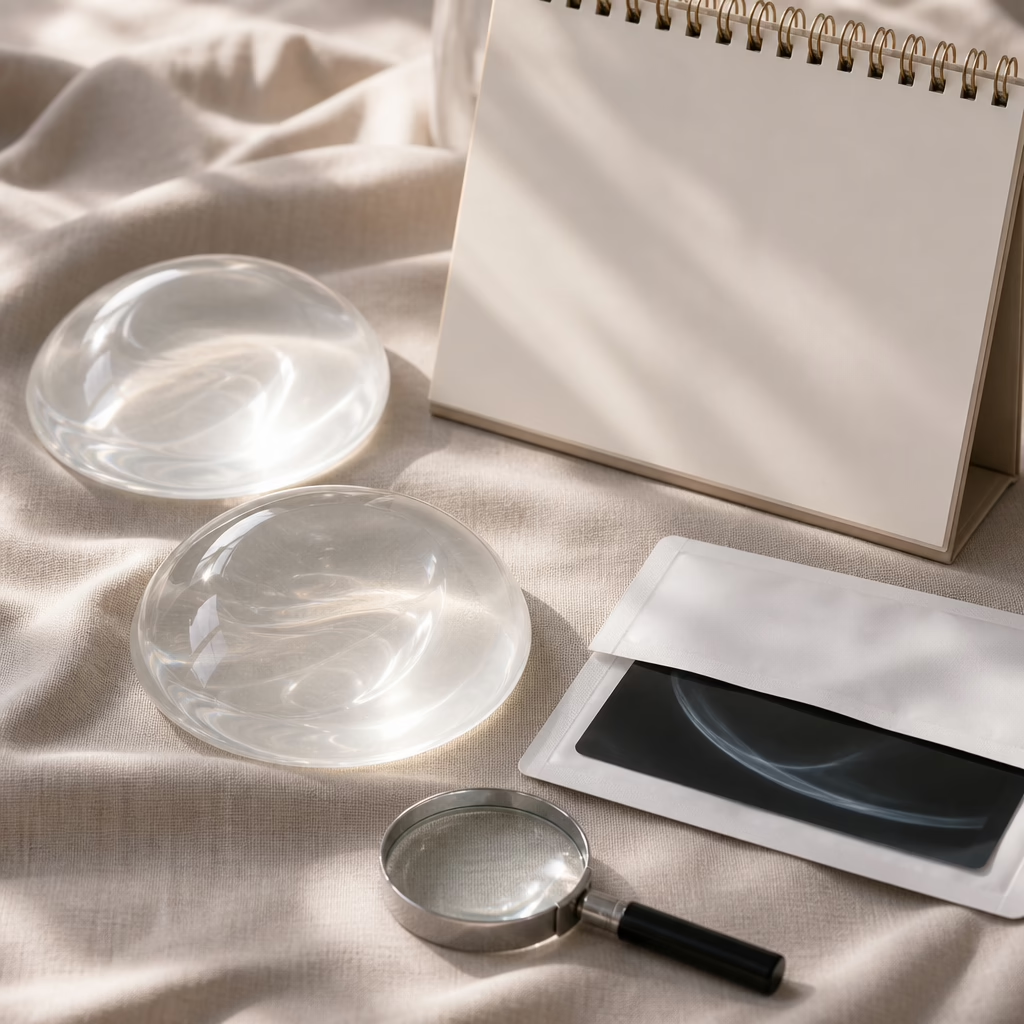
One of the most persistent beliefs about breast augmentation is that implants must be replaced every ten years. That statement is too simple. Breast implants are not lifetime devices, and the chance of complications or another operation generally increases the longer they remain in place. However, there is no universal expiration date that requires every patient with comfortable, intact implants to schedule surgery on the tenth anniversary.
The right approach is ongoing awareness, recommended follow-up, and an individualized decision. Some patients choose implant exchange sooner because their goals or breast shape have changed. Others have surgery because of rupture, capsular contracture, implant movement, discomfort, or another concern. A patient without symptoms may continue observation after discussing implant type, age, imaging, and risks with a qualified clinician.
At SunCoast Plastic Surgery in Pearland, Dr. Swet Chaudhari evaluates current implants, breast tissue, skin, symptoms, health history, and aesthetic goals before recommending an implant exchange, revision, removal, or continued monitoring.
Breast implants do not last forever
Saline and silicone implants are medical devices exposed to movement, pressure, scar-tissue formation, and normal aging. They are durable, but they cannot be guaranteed to last for life. Over time, an implant may rupture or deflate, and the capsule of scar tissue that naturally forms around it can tighten or change.
This does not mean a complication will occur at a specific year. Implant longevity varies widely. The ten-year mark is better understood as a point when many patients have accumulated enough time, life changes, or breast changes to ask whether their original result still fits their needs.
The U.S. Food and Drug Administration advises patients to understand that breast implants are not lifetime devices and that additional surgery may be needed. That is different from saying all implants should be replaced routinely every ten years.
Reasons patients consider breast implant exchange
Rupture or deflation
A saline implant rupture is usually noticeable because the sterile saline leaves the shell and the breast loses volume. The body absorbs the saline, but surgery is needed to remove the empty shell and, if desired, place a new implant.
A silicone implant rupture can be harder to recognize. Many are “silent,” meaning there may be no obvious change in appearance or sensation. Others cause a change in shape, firmness, tenderness, swelling, lumps, or asymmetry. Imaging can help evaluate implant integrity.
Capsular contracture
Every implant develops a capsule of scar tissue around it. In capsular contracture, that capsule tightens. The breast may feel firm, look rounder or higher, become distorted, or feel painful. Mild cases and severe cases are not treated identically, and the plan may involve work on the capsule as well as implant removal or replacement.
Implant position changes
An implant can sit too low, drift outward, move closer to the center, rotate, or otherwise shift relative to the breast. Changes in breast tissue, pregnancy, weight fluctuation, aging, trauma, implant size, and the original pocket can all influence position. Revision may require more than swapping one implant for another. The pocket and supporting tissues may need adjustment.
Rippling or visibility
Implant edges or folds can become visible or palpable, particularly in patients with thinner tissue coverage. Weight loss can reveal rippling that was not apparent before. Possible strategies depend on implant type, placement, soft-tissue thickness, and anatomy and may include changing the implant, adjusting the pocket, or adding tissue coverage.
A change in preferred size or shape
Someone who chose a larger look years ago may now want a smaller, lighter result. Another patient may want more fullness or a different profile. Preferences can change with age, lifestyle, fashion, pregnancy, athletic activity, or simply a different sense of what feels proportional.
Breast sagging over the implant
Implants add volume, but they do not stop aging. Breast tissue and skin can stretch while the implant remains in place. When the breast has descended, implant exchange alone may not correct the shape. A breast lift may be considered to remove excess skin and reposition breast tissue. The tradeoff is additional scarring.
Desire for implant removal
Some patients no longer want implants. Removal may be performed without replacement, but the breast will not necessarily return to its pre-augmentation appearance. Skin stretch, remaining tissue, implant size, age, pregnancy, and weight changes affect the result. A lift or fat transfer may be discussed when appropriate.
Symptoms that should prompt an evaluation
Contact a qualified medical professional if you notice a new change such as:
- Sudden or progressive breast asymmetry
- Loss of volume in a breast with a saline implant
- New firmness, hardening, or distortion
- Persistent pain or tenderness
- Swelling that develops well after the initial recovery
- A new lump in the breast, armpit, or around the implant
- A change in implant position
- Skin or nipple changes
- Any other persistent change that concerns you
These symptoms do not prove that an implant has ruptured or that a rare implant-associated condition is present. They do mean the change deserves evaluation. Breast health concerns should not be diagnosed from photographs or online symptom lists.
What monitoring is recommended for silicone implants?
Physical examination alone may not detect a silent silicone rupture. Current FDA labeling recommendations state that even patients without symptoms should have the first ultrasound or MRI to screen for rupture five to six years after silicone implant placement and then every two to three years afterward. If symptoms develop or an ultrasound is unclear, MRI may be recommended.
These recommendations concern implant-integrity screening and do not replace routine breast-cancer screening. Patients should follow age- and risk-appropriate mammography or other breast screening recommended by their healthcare professionals. When scheduling imaging, tell the facility that you have implants so appropriate techniques can be used.
Recommendations can change as evidence and implant labeling evolve. Confirm the current guidance for your implant and personal history with your plastic surgeon and breast-care provider.
What about BIA-ALCL and other implant-associated cancers?
Breast implant-associated anaplastic large cell lymphoma, or BIA-ALCL, is an uncommon lymphoma that develops in the capsule or fluid around an implant, not a form of breast cancer. Available evidence has shown a stronger association with textured-surface implants than smooth implants. The FDA has also reported squamous cell carcinoma and other lymphomas in the capsule around breast implants.
Persistent swelling, a mass, pain, or a change around an implant years after surgery should be evaluated. Testing may include imaging and sampling of fluid or tissue. The FDA does not recommend removing implants in people without symptoms solely because of concern about BIA-ALCL. Your implant history and personal preferences should be discussed with a qualified surgeon.
If you do not know which implants you have, look for your implant card or request operative records from the original practice or facility. That information can be useful when reviewing risks and follow-up.
Implant exchange is often more than a simple swap
The phrase “implant exchange” sounds straightforward, but revision surgery can involve several separate decisions:
- Remove and replace the implant, or remove it without replacement
- Choose saline or silicone
- Select a different size, width, projection, or profile
- Adjust the implant pocket
- Remove or release some or all of the capsule when indicated
- Address asymmetry or implant position
- Add a breast lift
- Consider fat transfer for selected contour concerns
The old incision may sometimes be reused, but additional incisions may be necessary if a lift or more extensive correction is planned. Operative records, implant information, and recent imaging can help the surgeon understand the starting point.
Should you go larger, smaller, or stay similar?
Size decisions should begin with your current anatomy and goals, not a cup-size label. Bra sizing is inconsistent, and the same implant volume can look very different on different frames. The width of the chest, existing breast tissue, skin stretch, nipple position, and implant pocket all matter.
Going significantly larger may place more weight on already stretched tissue. Going substantially smaller can leave more loose skin than expected. If a patient wants a smaller implant and tighter shape, a lift may be part of the discussion. Dr. Chaudhari can explain the likely tradeoffs and help select an option that fits the available tissue.
Recovery after implant exchange
Recovery depends on what is performed. A straightforward exchange using the existing pocket may differ from revision involving capsule work, pocket repair, a lift, or fat transfer. Swelling, bruising, tightness, and temporary changes in sensation can occur. A support garment and activity restrictions may be recommended.
Patients should arrange transportation, help at home, and enough time away from lifting and strenuous activity. Work timing depends on job demands. Follow-up appointments allow the team to monitor incisions, swelling, implant position, and healing.
Do not assume a revision will be easier simply because you have had breast surgery before. Scar tissue and the corrective work required can make revision more complex than the original augmentation.
Risks to discuss
Potential risks include bleeding, infection, changes in nipple or breast sensation, scarring, asymmetry, recurrent capsular contracture, implant rupture, implant malposition, contour irregularity, fluid collection, anesthesia complications, poor wound healing, and the need for additional surgery. Implant-specific risks and required patient information should be reviewed before a decision.
No operation can guarantee perfect symmetry or prevent future aging, weight changes, or tissue stretch. The aim is an improvement that aligns with your current goals and anatomy.
Questions to bring to an implant revision consultation
- Do my symptoms or examination suggest rupture or capsular contracture?
- Do I need ultrasound, MRI, mammography, or another test first?
- Can you identify my current implant type, size, and surface?
- Would exchange alone address my concern?
- Will the capsule or implant pocket need treatment?
- Would a lift be needed if I choose a smaller implant?
- Where will the incisions be?
- How will recovery differ from my first augmentation?
- What result is realistic with my current skin and breast tissue?
Frequently asked questions
Must I replace my breast implants after ten years?
No automatic rule requires replacement at exactly ten years. Implants are not lifetime devices, however, and ongoing follow-up is important. Symptoms, imaging, implant age, goals, and individual risk guide the decision.
Can I switch from saline to silicone or silicone to saline?
Often, yes. The best option depends on tissue coverage, desired feel and appearance, existing pocket dimensions, and your comfort with each implant type’s monitoring and risks.
Can implants be removed without being replaced?
Yes. The likely appearance after removal depends on implant size, skin stretch, breast tissue, and other changes. A lift or fat transfer may be discussed but is not required in every case.
Will insurance cover implant exchange?
Cosmetic exchange is generally not covered. Coverage for complications or reconstruction varies by diagnosis, original indication, and health plan. Obtain written benefit information rather than assuming coverage.
Can I have a mammogram with breast implants?
Yes. Tell the imaging facility about your implants when scheduling. The facility can use appropriate techniques, and your healthcare provider can recommend screening based on your age and risk.
Discuss breast implant exchange in Pearland
If your implants have changed, your goals are different, or you simply want a knowledgeable review of their current condition, a consultation can clarify the options. Learn more about breast augmentation and implant exchange, view the breast implant exchange gallery, and request an appointment with Dr. Chaudhari.
This article is general educational information. It is not a diagnosis, medical advice, or a substitute for individualized evaluation and current FDA guidance.